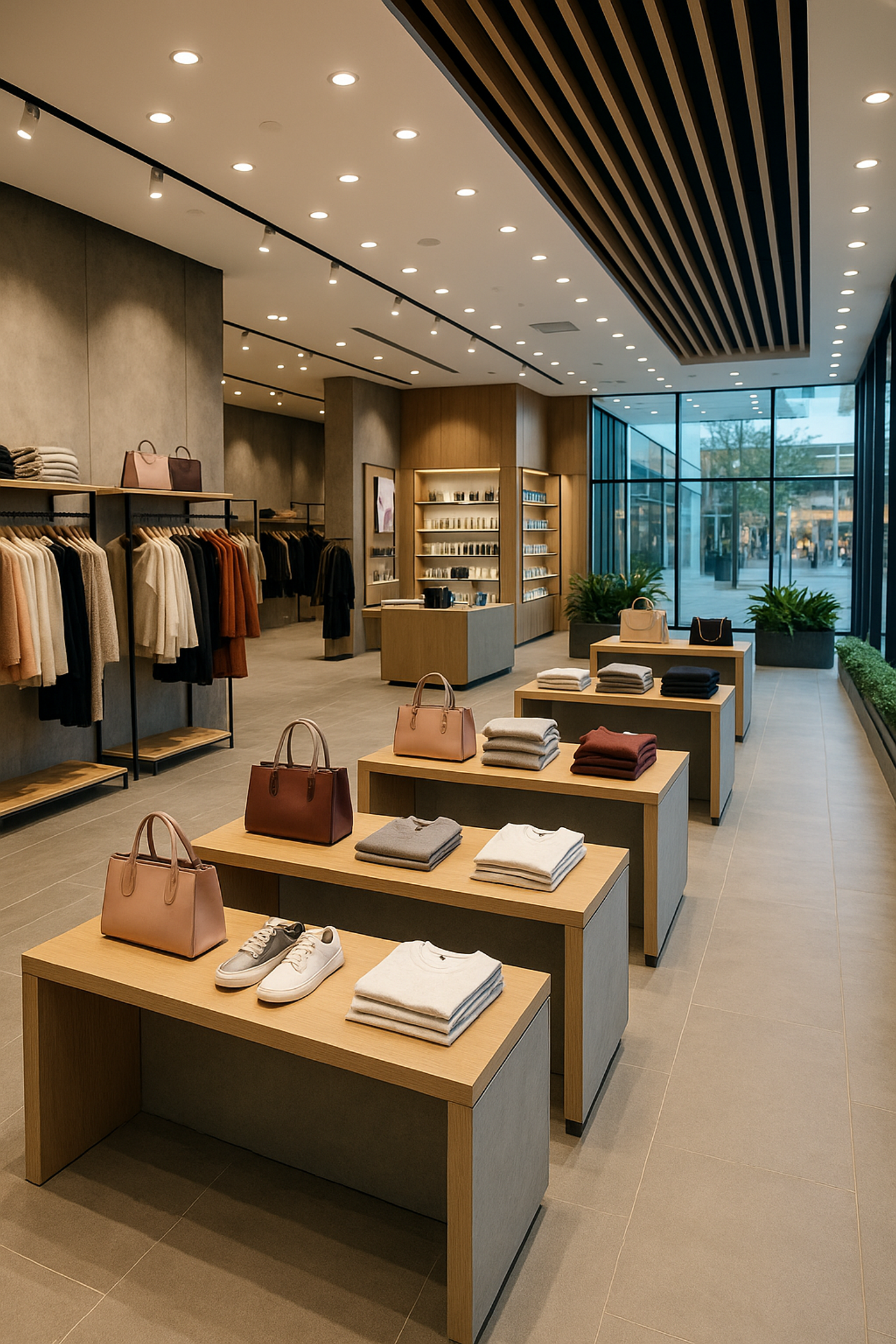
In 2025, retail design is no longer just about visual merchandising or curb appeal. It's about experience architecture. As consumer behaviors shift and digital integration deepens, retail environments are being reimagined as hybrid destinations: part brand showroom, part fulfillment hub, part community space. This whitepaper breaks down the leading trends that are redefining how retailers design spaces that attract, convert, and retain customers.1. Immersive Brand StorytellingRetailers are creating more than just places to shop—they’re creating stories you can walk through. Spaces now include:Interactive digital installationsThematic buildouts aligned with brand identityScent, sound, and lighting strategies for sensory impactWhy It Works: Multisensory design increases dwell time and builds emotional loyalty by making in-person shopping unforgettable.2. Omnichannel Integration at the Architectural LevelClick-and-collect, BOPIS (buy online, pick up in store), returns kiosks, and QR-based product walls are now standard. Retail spaces are being physically redesigned to support frictionless digital interactions.Design Features:Designated mobile pick-up lanesSmart lockers and digital POS zonesInventory visibility kiosks on the sales floorCompetitive Edge: Seamlessly merging digital and physical makes the store a true fulfillment and engagement center.3. Smaller Stores, Bigger ImpactRetail footprints are shrinking, but their presence is expanding. Brands are choosing high-traffic micro-locations with modular designs that deliver high impact per square foot.Tactics:Modular shelving and display systemsFlexible fixtures for rapid merchandising changesHyper-localized inventory and messagingOutcome: Higher agility with lower operating costs.4. Hospitality-Infused ExperiencesRetail is taking cues from boutique hotels and restaurants—making comfort, ambiance, and service central to design. Think lounges, drink stations, charging areas, and personalized service desks.Why It Works:
Reinventing Retail – Top Design Trends Reshaping the Customer Experience in 2025
In 2025, retail design is no longer just about visual merchandising or curb appeal. It's about experience architecture.


Subscribe to our weekly newsletter
Stay up to date with the latest news, projects, and insights from ABS Building Integrators.
Related articles


ABS is a full-service general contractor committed to delivering projects on time and within budget. We pride ourselves on fostering strong client relationships, built on trust and mutual respect, to ensure each project's success.